Introduction: The Efficiency Revolution
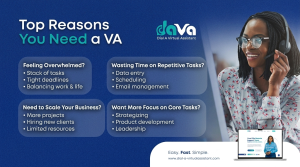
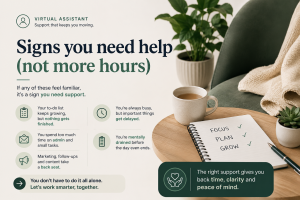
A Virtual Assistant is no longer just a luxury for high-level executives; in 2026, it is the fundamental engine behind every successful remote business. If you’ve ever felt overwhelmed by administrative tasks, hiring a Virtual Assistant is the most effective way to reclaim your time and focus on high-level strategy.
The global workforce has undergone a seismic shift. We are no longer tethered to physical cubicles, and the “gig economy” has matured into a sophisticated network of professional partners. When you hire a Virtual Assistant, you aren’t just hiring a remote worker; you are bringing on a specialist who understands the digital landscape better than most in-house employees. This guide explores the multifaceted world of the modern Virtual Assistant and how they can transform your professional life.
1. What is a Virtual Assistant in 2026?
At its core, a Virtual Assistant is a highly skilled, independent professional who provides administrative, technical, or creative support from a remote office. But beyond the logistics, they are systems architects. They don’t just “do tasks”; they build the processes that allow a business to run without the founder’s constant intervention.
In 2026, the definition has expanded. A Virtual Assistant might be a specialist in AI prompt engineering, a master of CRM automation, or a creative lead for your social media channels. The common thread is their ability to work asynchronously, delivering results while you sleep. They utilize state-of-the-art encrypted communication and project management tools to stay integrated with your team from anywhere in the world.
2. The Shift: From General Admin to Strategic Growth Operator
The “Generalist” Virtual Assistant who does a little bit of everything is becoming a relic of the past. Today’s market demands Growth Operators.
Previously, business owners hired a Virtual Assistant to “clear the plate” handling small, repetitive chores. Now, they hire them to “build the kitchen.”
- The Old Model: You tell the assistant exactly what to do, step-by-step, providing a manual for every click.
- The 2026 Model: You give your Virtual Assistant a goal (e.g., “Increase lead response time”), and they design the automation, test the tools, and present you with the final workflow.
3. The ROI of Hiring a Virtual Assistant
The numbers in 2026 are hard to ignore. For entrepreneurs and small businesses, the financial benefits of a Virtual Assistant go far beyond a lower hourly rate.
- Cost Efficiency: Businesses report saving up to 78% on operational expenses compared to hiring a full-time employee. You save on office space, health insurance, and tax overhead.
- Time Reclaiming: On average, entrepreneurs regain 13–15 hours per week by delegating routine tasks to their Virtual Assistant.
- Productivity Boost: Data shows that remote workers, including every Virtual Assistant, deliver 13% higher productivity than on-site staff because they work in optimized, distraction-free environments.
4. Deep Dive: Types of Specialist Virtual Assistant Roles
To maximize your SEO and business impact, you must identify which type of Virtual Assistant you actually need.
A. The Operations Virtual Assistant (The SOP Architect)
This person focuses on the “how” of your business. They document every process, create checklists, and ensure that your business has a “manual.” If you want to sell your business one day, an Operations Virtual Assistant is your most valuable asset. They turn your brain’s messy habits into a scalable company infrastructure.
B. The Social Media and Content Virtual Assistant
In 2026, content is currency. This Virtual Assistant handles everything from editing short-form video to scheduling LinkedIn posts and engaging with your community. They ensure your brand stays relevant without you having to spend hours on TikTok or Instagram. They often act as a first-line “community manager” to build real relationships with your followers.
C. The Technical and CRM Virtual Assistant
If you use HubSpot, Salesforce, or GoHighLevel, you need a specialist. This Virtual Assistant manages your database, sets up email sequences, and ensures your “tech stack” actually talks to each other. They prevent “leaky funnels” by ensuring every lead is tagged and followed up with automatically.
5. The Hybrid Workflow: How a Virtual Assistant Uses AI
One of the most common myths is that AI will replace the human assistant. The reality is the opposite: AI has made the Virtual Assistant indispensable. A modern Virtual Assistant uses AI to:
- Summarize Meetings: They use AI tools to take your 60-minute Zoom call and turn it into actionable bullet points.
- Draft Communications: Your Virtual Assistant uses LLMs to draft initial emails, which they then refine with your specific brand voice.
- Data Analysis: They can feed spreadsheets into AI tools to find trends in your sales data that would have taken a human hours to find.
6. The “Nearshore” vs. “Offshore” Debate
When looking for a Virtual Assistant, geography matters more than you think.
- Offshore (e.g., Philippines): Best for high-volume, repetitive tasks where cost is the primary concern and tasks can be completed overnight.
- Nearshore (e.g., Latin America): Rising in popularity in 2026 for US-based businesses. A Virtual Assistant in a similar time zone allows for real-time collaboration and seamless Slack communication during your actual working hours.
7. How to Hire and Onboard Your Virtual Assistant
The failure of most VA relationships happens in the first 30 days due to poor onboarding.
- The “Video First” SOP: Instead of writing long manuals, record yourself doing the task using Loom. Send it to your Virtual Assistant and ask them to write the written SOP based on the video.
- Set Clear KPIs: Don’t just ask them to “help.” Ask them to “respond to all customer tickets within 4 hours” or “post 3 times per week.”
- Communication Cadence: Establish a “Daily Standup” via Slack where your Virtual Assistant lists what they did yesterday, what they are doing today, and any “blockers.”
8. Common Pitfalls to Avoid
Many entrepreneurs struggle because they treat a Virtual Assistant like a mind reader. Avoid these three common mistakes:
- Mistake 1: Under-Communication. If you don’t provide feedback, the Virtual Assistant will assume they are doing it right. Weekly feedback loops are essential.
- Mistake 2: Dumping the Mess. You cannot delegate chaos. Clean up the process slightly before handing it over to your Virtual Assistant, or hire an “Operations VA” specifically to clean it for you.
- Mistake 3: Micromanagement. If you watch every second of their screen time, you lose the time-saving benefits of hiring a Virtual Assistant in the first place.
9. The Future of the Virtual Assistant Industry
As we look toward 2027 and beyond, the Virtual Assistant will become more of a “Chief of Staff.” They will manage other VAs, oversee AI agents, and act as a filter for the CEO. The bar for entry is rising; the successful Virtual Assistant of the future is an expert in both human psychology and machine learning tools.
10. Conclusion: Why You Can’t Wait
In the fast-paced economy of 2026, speed is a competitive advantage. Every hour you spend doing $20/hour work is an hour you aren’t doing $500/hour work. Hiring a Virtual Assistant isn’t an expense it’s an investment in your own freedom and your company’s growth.
Whether you start with five hours a week or forty, the moment you hire your first Virtual Assistant is the moment you stop being a “freelancer” and start being a “business owner.” The world is moving toward a distributed model don’t get left behind.